Learn why mold grows in bathrooms, step-by-step safe cleaning for tile & grout, when to call a pro, and prevention tips for St. George, Washington, Ivins & Santa Clara homes.
Short summary: Mold grows where moisture + food (soap scum, skin oils) meet porous grout and poor airflow. For small areas, use safe cleaners (hydrogen peroxide, oxygen bleach, or diluted vinegar) + scrubbing, replace moldy caulk, then control humidity (exhaust fans, squeegee, seal grout). For areas larger than ~10 sq ft, water damage, or health issues, hire a pro.
Why this matters.
If you live in St. George, Washington, Ivins, Santa Clara, or Hurricane, your bathroom gets hot showers and quick temperature changes that drive condensation. Even in a dry desert, the small steam cloud that forms during a shower is enough to feed mold in grout lines, corners, and poorly ventilated showers. This guide gives clear, science-backed steps to remove mold safely and stop it from coming back.
The science: what mold is and why grout is a favorite hangout:
Health note: Mold can cause allergy symptoms and respiratory irritation in sensitive people. For large or persistent infestations, professional remediation is safest.
Mold basics: Mold is a fungus that reproduces via microscopic spores. Those spores are everywhere — in the air and on surfaces — waiting for moisture and organic matter to grow.
Food source: In bathrooms, mold feeds on soap scum, body oils, dead skin cells, and organic residues that collect on grout, caulk, and tile edges.
Porous surfaces: Grout is slightly porous and can trap moisture and organic matter inside microscopic pores. This gives mold a protected environment where it can colonize.
Biofilm & protection: As mold establishes itself, it often forms a biofilm (a slimy matrix) that helps protect it from simple rinses. That’s why quick sprays sometimes only lighten the surface but don’t remove the root issue.
Why bleach sometimes fails on grout: Chlorine bleach kills surface spores on non-porous tile, but it doesn’t penetrate deeply into grout pores or porous caulk. After bleach bleaches the surface, the underlying mold can regrow if moisture returns.
What that means for cleaning: you’re fighting hydrophobic, often carbonized material that resists water. The most effective chemistry is either to saponify (an alkaline reaction that turns fat into soap-like compounds), oxidize (break down chromophores and organics), or use mechanical action after softening the residue.
Safety first:
If the moldy area is larger than about 10 square feet, the EPA recommends hiring a professional. (Large patches often signal a bigger moisture or structural problem.)
If household members have asthma, severe allergies, or compromised immune systems, consider professional help.
Never mix cleaning chemicals. (Bleach + ammonia, or bleach + vinegar creates toxic gases.)
Wear PPE: gloves, eye protection, and a mask (N95 recommended) when scrubbing moldy areas. Ventilate well (open window, run exhaust fan).
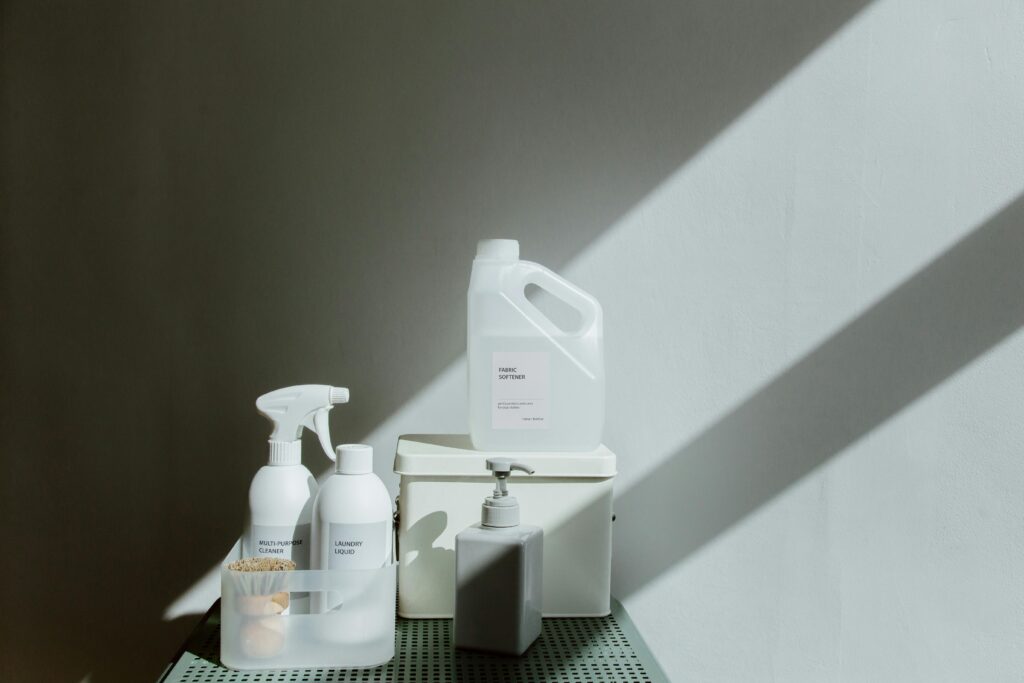
Tools & supplies you’ll want on hand
A short shopping list before you start:
- Rubber gloves and safety glasses
- N95 mask or respirator (for scrubbing)
- Stiff nylon grout brush or old toothbrush
- Non-scratch scrub pads and microfiber cloths
- Spray bottles (for cleaners)
- Distilled white vinegar (do not mix with bleach)
- 3% hydrogen peroxide (in spray bottle)
- Oxygen bleach (sodium percarbonate / “color-safe bleach”)
- Baking soda (sodium bicarbonate)
- Borax (optional — good antimicrobial cleaner)
- Grout sealer (penetrating sealer for cement grout)
- White caulk / mildew-resistant silicone (for re-caulking)
- Bucket, warm water, sponge
Step-by-step cleaning protocols (surface by surface)
Note: These are for small to moderate areas (a few square feet). For larger infestations or hidden water damage, call a pro.
A. Tile & Non-porous Surfaces (glass, glazed tile)
This is the easiest place to start.
- Ventilate the bathroom (fan + open window).
- Put on gloves, mask, eye protection.
- Spray 3% hydrogen peroxide directly on the moldy area and let it sit 10–15 minutes. (Hydrogen peroxide is an oxidizer that kills mold and helps break stains.)
- Scrub with a nylon brush or pad.
- Rinse with warm water and dry thoroughly.
- If staining remains, apply an oxygen bleach paste (oxygen booster + water) to the stain, let sit 15–30 minutes, then scrub and rinse.
Why this works: Hydrogen peroxide oxidizes cell components and helps lift pigments; oxygen bleach breaks chromophores and loosens organic residue without the volatility or fumes of chlorine bleach.
B. Grout (cement grout)
Grout is porous — it needs a deeper approach.
- Make a paste: baking soda + water (thick paste). Apply to grout lines.
- Spray hydrogen peroxide onto the paste (it will fizz lightly).
- Let sit 10–20 minutes, then scrub vigorously with a grout brush.
- Rinse and towel-dry.
- If mold persists, a borax solution (1/2 cup borax to 1 gallon warm water) applied and scrubbed can be effective. Rinse and dry.
- Seal grout when fully dry (see prevention section).
Alternative: Use a commercial grout cleaner or oxygen bleach per label instructions. Avoid harsh acids or metal brushes that damage grout.
Why this works: The baking soda provides mild abrasion and alkaline environment; hydrogen peroxide adds oxidation to kill and lighten mold. Borax is alkaline and inhibits regrowth.
C. Caulk & Silicone Joints
Mold in caulk is often embedded and hard to remove.
- For minor surface mold, try hydrogen peroxide spray, let it soak, then scrub. If caulk remains stained or crumbly, remove and replace the caulk.
- When re-caulking, use mildew-resistant silicone caulk (100% silicone is best in showers). Ensure surfaces are fully dry and apply a continuous bead; tool it smooth and let cure per instructions.
Why this works: Caulk is a polymer and once mold penetrates it or the caulk is failing, replacement is the reliable fix.
D. Shower Curtain & Liners
- Fabric curtains: wash on hot cycle with 1 cup white vinegar.
- Plastic liners: scrub with soapy water and oxygen bleach solution; replace if mildew stained beyond cleaning.
E. Painted Drywall (around shower or ceiling)
If mold is deep, flakes, or area is >10 sq ft → call a professional (may indicate moisture behind wall or insulation damage).
Professional-grade options (when home remedies don’t work)
If after trying hydrogen peroxide, oxygen bleach, borax, and scrubbing you still have regrowth or large dark areas, consider:
Full remediation — for structural water damage, mold behind walls, HVAC contamination.
Regrouting / epoxy grout — replaces porous cement grout with epoxy grout that resists moisture.
Deodorizing & finishing touches
Consider a light application of borax solution wiped off to leave a mild residue that discourages regrowth (rinse after a few hours if needed).
After cleaning, run the bathroom fan and leave doors open to dry.
Place a small bowl of baking soda in a cabinet or closet to absorb residual odor for 24–48 hours.
Prevention — the steps that stop mold from coming back
- Ventilation is #1. Run an exhaust fan during showers and for 20–30 minutes afterwards. If you don’t have a fan, open a window or crack the door.
2. Squeegee after every shower. This removes surface water from tile and glass and dramatically cuts moisture left for mold.
3. Wipe down grout lines weekly. Use a microfiber cloth or quick hydrogen peroxide spray.
4. Seal grout annually. Penetrating grout sealers fill pores in cement grout and reduce absorption of moisture and soap scum. (Follow manufacturer cure times.)
5. Use mildew-resistant caulk when you replace joints.
6. Fix leaks fast. A leaky valve, shower head, or grout gap invites mold growth behind tile.
7. Control humidity. In closed houses, consider a small dehumidifier for the bathroom if humidity regularly exceeds 50%.
8. Reduce soap scum buildup. Use liquid body wash (less scummy than bars) and rinse shampoo residue from grout.
Racks are often dirtier than the oven interior and benefit from soaking.
Products worth considering (buying list)
3% Hydrogen Peroxide (drugstore) — versatile, safe on most surfaces.
Sodium Percarbonate / Oxygen Bleach (OxiClean or store brand) — great for grout stain lifting.
Borax — cleaning & mild mold inhibition (follow safety instructions).
Grout sealer (penetrating, not surface film) — brands like Aqua Mix or Tuff Duck work well.
100% silicone mildew-resistant caulk — for resealing shower perimeters.
Commercial mold cleaners (Tilex, Mold Armor) — for heavy surface stains (use with caution and ventilation).
N95 masks, nitrile gloves, eye protection — keep on hand for DIY jobs.
Frequently Asked Questions
How quickly should I clean bathroom mold?
Clean small mold spots as soon as you see them. In St. George and nearby towns like Washington or Ivins, quick action prevents stains and keeps mold from spreading into grout pores
Can I use bleach on grout?
Bleach can clean surface mold on non-porous tile, but it doesn’t penetrate grout pores. For cement grout in Santa Clara, use hydrogen peroxide + baking soda or oxygen bleach and reseal the grout afterward.
When should I call a professional in St. George for mold?
If the mold covers more than about 10 square feet, if it returns after cleaning, or if you see mold inside walls/ceilings or HVAC, call a remediation pro in St. George, Washington, or Ivins.
Will sealing grout stop mold forever?
Sealing grout greatly reduces moisture absorption and slows mold growth, but it doesn’t replace good ventilation and cleaning. Combine sealing with squeegeeing, fan use, and quick cleaning.
How do I dry the bathroom fast after a shower?
Squeegee tiles and glass, run the exhaust fan for 20–30 minutes, crack the door, and keep a towel handy to blot puddles. If humidity is a persistent problem, consider a small dehumidifier.