

Learn why workout clothes smell, the science behind the odor, and step-by-step home remedies + product recommendations for St. George, Washington, Ivins & Santa Clara. Keep your gear fresh — every wash.
Short summary: Sweat smells because bacteria and oils get trapped in technical fabrics. The fix is an enzyme pre-soak + the right wash routine (skip fabric softener, use sport detergent or an oxygen booster), clean your washer, and air-dry in sun when possible. If that fails, try a commercial enzyme soak or replace the garment padding. Read on for the full science, step-by-step treatments, prevention tips, and product suggestions tailored for St. George and nearby cities like Washington, Ivins, and Santa Clara.

Why workout clothes get that musty smell (and why normal laundry sometimes fails).
If you live in St. George, Hurricane, Washington, Ivins, or Santa Clara, you know the heat — and that means more sweat during workouts. Sweat itself is mostly water and salts and is basically odorless. The smell you notice? That’s bacteria and the oils your skin leaves behind.
Here’s the short scientific breakdown:
- What causes the smell: Skin oils (sebum), dead skin cells, and sweat get trapped in fabric fibers. Bacteria on the fabric metabolize those substances and create small volatile compounds (notably sulfur-containing thiols and various fatty acids) that our noses perceive as “musty” or “stinky.”
- Why synthetic gym fabrics trap odor: Many activewear garments are polyester, nylon, and spandex blends. These synthetic fibers are hydrophobic and oleophilic — they repel water but attract and trap oils. That means the oil carrying bacteria and odor molecules can cling inside the fiber structure.
- Why regular detergent sometimes fails: Typical laundry detergents use surfactants to lift soils and oils, but if oils have penetrated and dried deep in the fiber or enzymes haven’t been used, the odor molecules remain. Also, too much detergent or using fabric softener can leave residue that actually traps odor molecules and block detergents from reaching the oils.
- Temperature and enzyme behavior: Enzymes (protease for protein, lipase for fats) are biological catalysts used in many detergent formulas. They work best at moderate temperatures and need time to act — too hot can denature them, and too cold reduces activity. That’s why following the garment label and enzyme product directions matters.
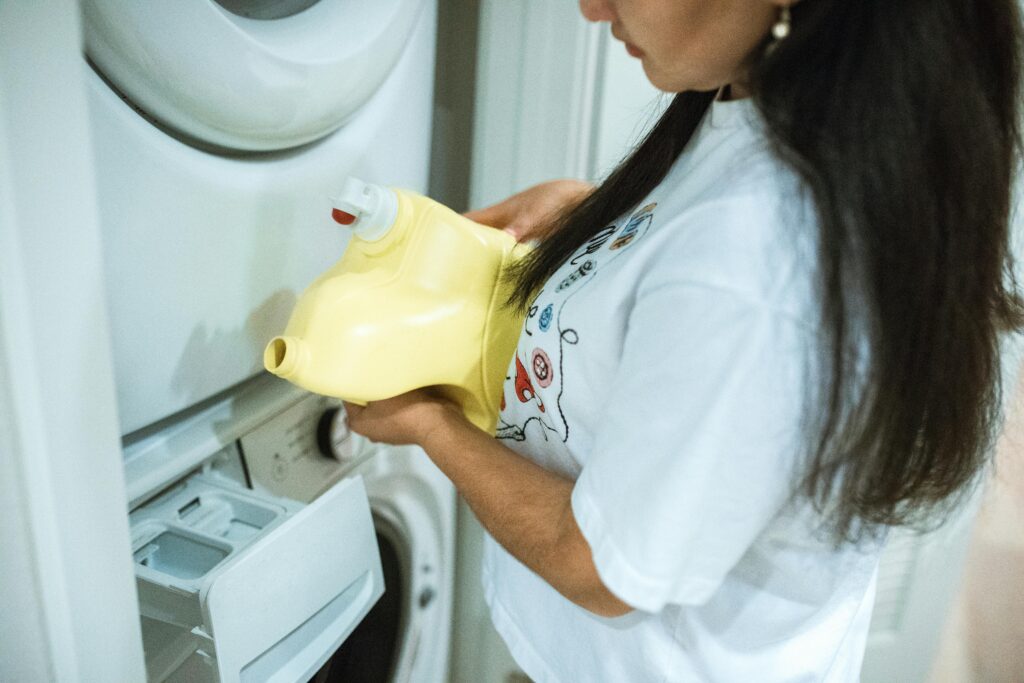
Step-by-step: How to treat musty workout clothes at home (best practice).
Below is a practical protocol you can follow after every workout or whenever a stink develops. These steps assume you’ll check your garment care label first (always do that).
Quick triage — immediate actions (when you get home)
- Air them out. Don’t stuff sweaty clothes in a gym bag. Hang them up (inside out) until you can wash. In St. George, a short time in shade or a quick sun-air exchange helps.
- Pre-rinse if necessary. If you’ll be washing later, a quick cold water rinse helps remove surface salt and sweat.
Standard home treatment (recommended routine)
- Pre-soak in an enzyme solution (30–60 minutes).
- Fill a sink or basin with cool or lukewarm water and add an enzyme laundry booster or enzyme detergent (follow product directions). Enzymes help break oils and protein residues into smaller, washable pieces.
- Wash on the correct cycle with the right detergent.
- Use a sport-specific detergent or a detergent with enzymes. Select a wash cycle that’s warm enough for the detergent/enzyme to work (but within the garment’s care instructions). For most synthetics, warm or cool water with an extra rinse is ideal.
- Do not use fabric softener — softeners coat fibers and trap odors.
- Use less detergent than the manufacturer recommends for full loads; excess detergent builds up residue.
- Add an oxygen booster when needed.
- If odors persist, add an oxygen-based bleach (sodium percarbonate / “oxygen bleach”) to the wash — it helps oxidize and remove odor molecules without the fabric damage bleach can cause.
- Extra rinse. Always run an extra rinse to remove detergent and loosened residues.
- Air-dry in sun when possible. UV light from the sun helps kill bacteria and deodorize fabrics. In St. George and surrounding cities, you can safely get a strong daytime sun-dry that helps. For dark colors, dry in shade to prevent fading. If you must use a dryer, use a gentle, low-heat tumble.
Deep-clean for persistent / set-in odors
If the routine above doesn’t fully remove the smell:
- Overnight enzyme soak. Use a concentrated enzyme product and soak overnight, then wash as above.
- Oxygen bleach overnight soak. Dissolve oxygen bleach per product instructions and soak for up to 6–8 hours (check colorfastness first).
- Repeat cycles. Sometimes two enzyme washes do the trick.
- If still present: consider professional laundering for technical gear or replacing the piece (odor can be trapped permanently in linings and padding).
Home remedy recipes (safe, inexpensive)
- Vinegar pre-soak (quick fix): 1 part white vinegar : 4 parts water. Soak 20–30 minutes, then wash. Vinegar is acidic and helps neutralize some residues and breaks down light mineral or detergent buildup. Don’t mix with bleach.
- Baking soda boost (odor adsorption): Add 1/2 cup baking soda to wash or make a paste (baking soda + water) to pre-treat armpit areas for 15–30 minutes. Baking soda adsorbs odors and helps neutralize acids.
- Vinegar + baking soda caution: They react together (fizz) and largely neutralize each other; using one method at a time is more effective.
- Cold water rinse with salt for quick absorption: A brief cold rinse with a teaspoon of salt can help pull out some sweat salts; useful on the go.
Prevention — keep clothes fresh longer
- Wash after every use — this is the single most effective prevention.
- Avoid fabric softener and dryer sheets. They’ll reduce moisture-wicking and trap residues.
- Air dry in sunlight periodically to naturally sanitize (shade for darks). In St. George, sun drying is a great ally.
- Rotate garments — give fabrics a recovery period between uses.
- Use moisture-wicking base layers so outer layers don’t absorb as much sweat.
- Reduce detergent usage and occasionally run a vinegar rinse to prevent buildup.
- Store clean gear dry in breathable locker or ventilated drawer; avoid sealed plastic containers if the gear is not fully dry.
When to consider replacement or professional care
- Persistent odor despite multiple enzyme + oxygen treatments — sometimes padding, linings, or the fiber structure itself holds odor permanently. Replacement may be the most cost-effective solution.
- Specialty technical outerwear (e.g., Gore-Tex, DWR coatings) — avoid home harsh treatments; use product-specific cleaners or professional gear care.
- Expensive/team uniforms — consider professional sports laundry services in St. George or professional textile cleaners who handle technical gear.